

Introduction to DevOps: History, Principles, and Practices
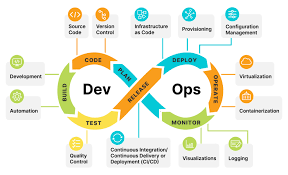
In recent years, DevOps has emerged as a popular approach to software development and deployment, promising faster, more efficient, and more reliable delivery of software products. But what is DevOps, where did it come from, and what are its key principles and practices? In this article, we will provide an overview of the history, principles, and practices of DevOps.
History of DevOps
DevOps is a relatively new term, coined in 2009 by Patrick Debois and Andrew Shafer, who organized the first DevOpsDays conference in Ghent, Belgium. However, the roots of DevOps go back much further, to the early days of software development and IT operations.
Traditionally, software development and IT operations were treated as separate and distinct functions, with developers focused on writing code and operations staff responsible for deploying and managing it. This siloed approach often led to inefficiencies, communication gaps, and slow, error-prone delivery of software products.
In the late 1990s and early 2000s, a new movement called Agile software development emerged, emphasizing collaboration, flexibility, and rapid iteration. This approach helped to break down some of the barriers between development and operations, but it was not until the emergence of DevOps that a truly integrated approach to software delivery took hold.
Principles of DevOps
At its core, DevOps is based on the principles of collaboration, automation, and continuous improvement. These principles are designed to promote faster, more efficient, and more reliable delivery of software products, by breaking down silos, reducing manual intervention, and increasing feedback loops.
Collaboration:-
DevOps emphasizes the need for closer collaboration between development and operations teams, to ensure that everyone is aligned on goals, priorities, and timelines. This collaboration helps to break down silos and reduce communication gaps, leading to more efficient and effective delivery of software products.
Automation:-
DevOps relies heavily on automation, to reduce manual intervention and ensure consistency and repeatability in software delivery. This includes automating everything from code testing and deployment, to infrastructure provisioning and configuration management.
Continuous improvement:-
DevOps emphasizes the need for continuous improvement, by regularly assessing and refining processes, tools, and techniques. This includes collecting feedback from customers and stakeholders, monitoring performance metrics, and applying a "fail fast, learn fast" approach to experimentation.
Practices of DevOps
To put these principles into practice, DevOps teams typically adopt a range of tools and practices, including:
Continuous integration and continuous delivery (CI/CD):-
This involves automating the process of building, testing, and deploying software, to ensure that new features and bug fixes are released quickly and reliably.
Infrastructure as code (IaC):-
This involves treating infrastructure as code, using tools like Terraform or CloudFormation to define and provision infrastructure resources programmatically.
Containerization:-
This involves packaging applications and their dependencies into containers, which can be deployed quickly and consistently across different environments.
Monitoring and logging:-
This involves collecting and analyzing performance metrics and logs, to identify and resolve issues quickly and proactively.
In Conclusion :-
DevOps is a powerful approach to software delivery, built on the principles of collaboration, automation, and continuous improvement. By breaking down silos, reducing manual intervention, and increasing feedback loops, DevOps teams can deliver software faster, more efficiently, and more reliably, while also promoting a culture of experimentation and innovation. Whether you are a software developer, IT operations professional, or business leader, understanding DevOps and its principles and practices can help you to stay ahead of the curve and drive success in the digital age.


